Under California law, simple trespass per Penal Code 602 is the entry or remaining on another person's property without their authorization, and it is typically a misdemeanor. However, the situation becomes far more serious under Penal Code 601, which addresses aggravated trespass. This charge applies when a credible threat of serious injury is made before an unlawful entry, turning a minor property offense into a potential felony. Aggravated trespass may result in severe punishment, such as a lengthy jail sentence. Investigation or arrest for this offense in California may seem overwhelming; however, prosecutors must prove that you acted with a specific intent and meet all the statutory elements. Preparing a solid legal defense is an important step in defending your criminal case . This guide will help you understand the law, the charges at hand, and the significance of a strong defense strategy.
An Overview of an Aggravated Trespass
California law distinguishes between simple trespass and aggravated trespass based on whether a prior threat preceded a subsequent physical act. You may be accused of aggravated trespass, also known as felony trespass, if prosecutors believe you violated California Penal Code 601. This statute is unique because it requires a multi-step process that occurs over a specific period of time
To become aggravated, you do not merely need to be on the land belonging to another person without their permission. The law presupposes that you must have initially posed a credible threat to inflict serious bodily injury on the victim or his or her family. The threat must put that individual or family in reasonable fear for their lives. However, the threat alone does not constitute aggravated trespass; the crime is completed only when it is followed by the unlawful entry into the victim’s home or workplace.
In addition, the law focuses on both the timing and the purpose of the entry. If you enter the threatened person’s property within 30 days of making the threat and do so with the intent to carry it out, the conduct rises to aggravated trespass. This shift is significant because the offense becomes a crime against a person rather than a property crime.
California law approaches such cases with great care, as they are often seen as precursors to violent behavior or family unrest. As a result, the prosecution will seek to identify specific factors to make the charge viable. If any of these elements, the threat, the timing, or the particular intent, are missing, the aggravated trespass charge is legally invalid.
Defining a Credible Threat
The aggravated trespass charge is based on the presence of a credible threat. You cannot be convicted of violating Penal Code 601 unless the prosecution can demonstrate beyond a reasonable doubt that you made a statement or performed an act that conveyed the intent to inflict serious bodily injury. A credible threat makes the target reasonably fear for their safety or the safety of their family.
The threat cannot be mere posturing or an angry outburst during a heated argument. The legal requirement is that the victim of the threat should have felt threatened and that a reasonable individual in their position would have felt threatened. If the threat was obviously a joke or so unrealistic that no one could have taken it seriously, it might not qualify as credible under the statutory definition.
Defining Serious Bodily Injury
You have to examine the nature of the harm threatened to know when a threat results in the aggravated status of a trespass. California law describes serious bodily injury as a severe impairment of physical condition. It is a high bar that encompasses but is not limited to:
- Loss of consciousness
- Concussions
- Bone fractures
- Long-term loss or damage to any body part or organ
- A wound that needs a lot of suturing
- Severe disfigurement
In aggravated trespass cases, the prosecution should prove that your threat was capable of causing this level of serious injury. If you threaten to slap your victim or push them, it might not be considered a threat of serious bodily injury as it is strictly interpreted in Penal Code 601. This difference is often a key argument in court, where the defense can argue that the threat was not aggravated to the required level under the law.
Understanding Oral, Written, and Electronic Threats
In today’s legal system, how you communicate a threat is just as important as what the threat says. A credible threat may be made either orally, in writing, or through electronic communication devices. This does not involve only old letters and notes but also text messages, emails, social media posts, and even video recordings.
You should know that in such cases, digital evidence is often a key resource for prosecutors. When you send an angry email threatening someone, and then go to that person's workplace two weeks later, the email's digital footprint will be a key piece of evidence.
The threat need not be made face-to-face as stated in the law. The medium of delivery meets the criteria of raising a trespass to an aggravated charge as long as the targeted victim receives the communication and it creates a reasonable level of fear.
The 30-Day Statutory Window
The thirty-day statutory window is one of the strictest elements of California Penal Code 601. To be considered legally as aggravated, your unlawful entry into the residence or workplace of the victim should have taken place within thirty days after the first credible threat. This period is a very crucial aspect that the prosecution must prove with accuracy.
The rationale of this window is that the threat and the entry should be closely connected in time to prove a persistent intent to harm. When you threaten in January and do not go to the individual's property until June, the law will consider the two incidents separate and possibly independent. Under these circumstances, you may be charged with the threat or even simple trespass, but would not be guilty of an aggravated trespass.
You are also to take into consideration the fact that this thirty-day rule is a protective measure against the indefinite looming of a felony charge due to one mistake in judgment. When you are examining the facts of your case, the most crucial thing is to determine the exact number of days between the alleged threat and the alleged entry. If the entry was made on the thirty-first day, the technical requirements of Penal Code 601 will not be satisfied.
This is a technicality that can result in a felony conviction, a far less serious misdemeanor, or the outright dismissal of the aggravated charges. Your attorney will examine schedules and dates to ensure that the prosecution is not stretching the law to the limit set by the particular statutory constraints of the California legislation.
Unlawful Entry into a Home or Workplace
The second part of the aggravated trespass equation is the physical entry. You should have trespassed the property illegally, that is, without the consent of the owner or the occupant of the property. Nonetheless, Penal Code 601 is limited to two types of places: a home or a workplace.
Entering a public park, an empty lot, or a commercial store open to the public can lead to various charges, but it does not usually amount to aggravated trespass under this particular statute.
The law aims to protect individuals at locations where they are most susceptible and spend most of their time. When you enter these private or semi-private areas after making a threat, you are perceived as violating the victim's basic sense of security.
Defining a Workplace
The definition of a workplace, as it is applied to aggravated trespass, is wider than you may think. It usually refers to any location where the victim is engaged in their employment or business activities at the time of the entry. This may be a modern office, a shopping center, a construction site, or even a home office if the individual frequently conducts business there.
To have the entry qualify as an aggravated trespass offense, the prosecution has to demonstrate that you were aware, or ought to have been aware, that the premises were the workplace of the victim.
Moreover, they should demonstrate that you visited that particular place to locate the individual whom you threatened. However, if you accidentally entered a large office building for some other reason and the victim happened to be an employee there, the aggravated portion of the charge could be dismissed if you show there was no specific targeting of the victim.
Defining Entry Without Consent
To be found guilty of any form of trespass, the entry should be unlawful, which usually means it occurs without the property owner’s consent. The relationship between the parties can complicate an aggravated trespass case, as consent is often at issue. If you had already been allowed to enter the home or the workplace, maybe as a former employee or a former romantic partner, the prosecution should demonstrate that you had been denied the right to enter the premises and that you knew about the denial.
If you thought that you still had a valid reason or right to remain on the premises, then your entry may not be regarded as unlawful in the criminal sense. In addition, if you were welcomed onto the premises by a colleague or other resident who was unaware of the danger, the absence of unlawful entry may be a strong defense to the aggravated offense.
Why Intent Is the Hardest Part for Prosecutors to Prove
Your specific intent is the hardest element of an aggravated trespass case that a prosecutor must prove. The state must demonstrate that when you entered the property of the home or place of work of the victim, you intended to execute the threat you had already made.
It is a specific intent requirement, which is a far greater burden of proof than general intent. If you entered the premises on any other grounds, like to deliver borrowed property, to collect your children, or to find an amicable solution to a dispute, you are not guilty of aggravated trespass.
Circumstantial evidence can, in many cases, be used to prove intent. The prosecution will examine your actions before the entry, anything you carried with you when you entered, and anything you said during or after the incident. For example, when you walked into a workplace with a weapon, the intent to harm is far more compelling than when you walked in with no weapon and requested to see a manager.
Since intent is purely in your head, a good defense lawyer should examine other explanations as to why you may have unlawfully entered the victim’s property or workplace. If there is no clear evidence that you intended to inflict harm, the aggravated element of the trespass charge cannot be sustained.
Legal Penalties of Aggravated Trespass
Aggravated trespass is a wobbler in California, which means the prosecutor can charge it as a misdemeanor or a felony. This is usually determined by how serious the threat is, your criminal record in the past, and the circumstances under which the entry and threat occurred.
For a misdemeanor, you may end up serving up to one year in county jail and a fine of not more than $2,000. But if the prosecution treats the case as a felony, the stakes are much higher. An aggravated trespass felony conviction may lead to a sentence of 16 months, two years, or three years in state prison.
In addition to the short-term risk of being sent to prison, the long-term effects of a felony conviction can haunt you, your reputation and career far into the future. You will lose the right to own or possess a gun and it may be difficult to find good paying jobs.
Moreover, since aggravated trespass requires a credible threat of harm, it may be brought up against you in subsequent court cases, including child custody cases or restraining order cases. Since the court can reduce the charge to a misdemeanor even after a conviction, it is necessary to have an advocate who can point out mitigating factors. That way, even if you were once convicted of a felony violation of Penal Code section 601, you may be able to get that conviction reduced to a misdemeanor under PC section 17(b) and have the conviction dismissed under PC section 1203.4.
Mitigation may include demonstrating that you have undergone counseling and showing that the behavior was a one-time episode resulting from emotional distress. These details may be critical in avoiding the most severe penalties or reducing the charge later, after a successful completion of probation.
Find an experienced and Compassionate Criminal Defense Attorney Near Me—That would be ME!
The aggravated trespass charge is daunting and can lead to severe, long-term consequences; therefore, prompt and immediate legal action is necessary. Penal Code 601 cases can be complicated; however, there are various ways to defend and mitigate against such charges. Your defense attorney could raise doubts on the credibility of the threat, the time when it was entered, and the possibility of proving the specific intent.
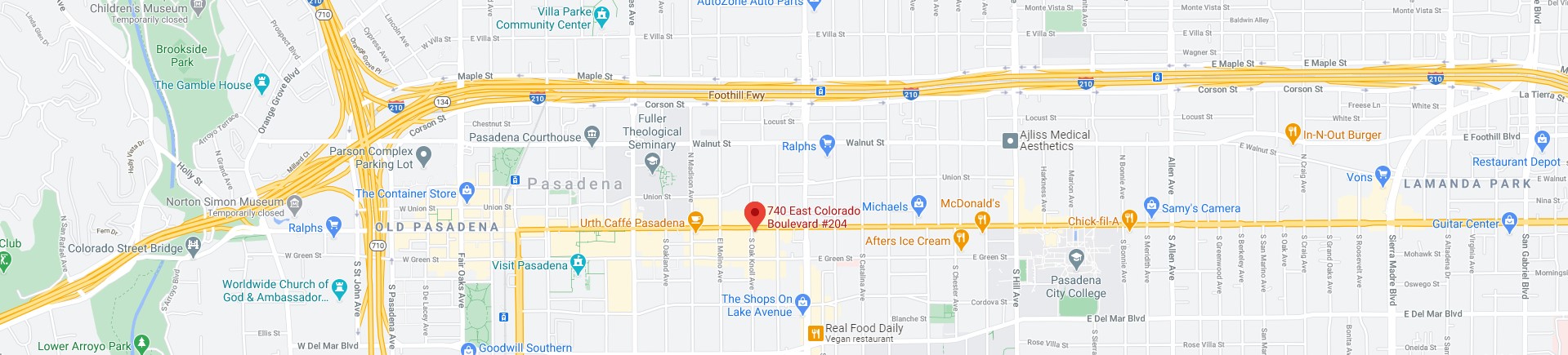
At The Law Office of Ann Gottesman, I, Ann Gottesman am ready to provide aggressive defense services to your or a loved one if you are facing trespass charges in Pasadena or any other city within the San Gabriel Valley and Los Angeles County. Contact me today at 626-710-4021 to arrange a confidential meeting so we can discuss your case. I personally answer my phone and do not hand off a client to any other attorney. You will be working with me directly! You may also text me on my cell phone at 818-606-3142.